New Neighborhood Children’s Groups – what they are, why they are emerging, and why they matter
In 2025, a new public service is being introduced in the Czech Republic that will significantly change the options for childcare for preschool-aged children – Neighborhood Children’s Groups (SDS). This innovation responds to the shortage of places in kindergartens and children’s groups, as well as to the need for greater flexibility among parents. In this article, you will learn how SDS works, who it can help, how it is regulated, and where to find the current list.
What are Neighborhood Children’s Groups?
This is a new type of childcare service for preschool-aged children, valid from May 1, 2025.
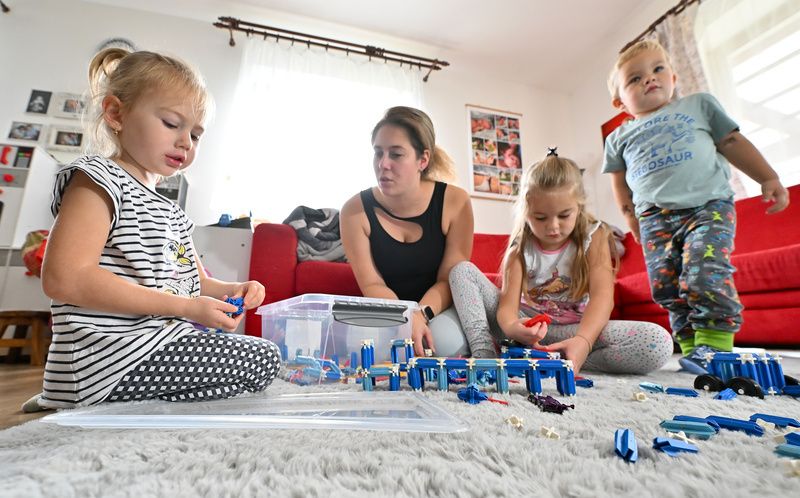
A neighborhood group operates in the home of a registered caregiver (or in other suitable premises) who looks after a maximum of four children including their own.
Children’s age: from approximately 6 months until the start of compulsory schooling.
Why were they created and what needs do they address?
Many parents cannot get a place in a kindergarten or a standard children’s group, especially for children under the age of three. SDS aims to provide a more flexible alternative.
They support work-life balance — parents will have more options for when and where they can leave their child under supervision.
A pilot project confirmed that there is demand for this type of service in the Czech Republic. In the first month after launching the online application, 23 applicants expressed interest in establishing an SDS.
Conditions, legislation, and requirements
Neighborhood children’s groups are established through an amendment to Act No. 247/2014 Sb., effective from May 1, 2025, which expands the existing childcare service in children’s groups to include this new SDS type.
The caregiver must be registered in the SDS provider registry (Labour Office / Ministry of Labour and Social Affairs) and meet qualification requirements (e.g., education in pedagogy or healthcare, or a nanny certificate), as well as spatial, hygiene, safety, and child vaccination requirements.
The premises must be adapted for children (e.g., adequate room size for play/rest, access to outdoor activities). Only one SDS may operate within a single household.
Funding: SDS is financially supported by the state through operational contributions plus parental co-payments. Parents pay at most the amount defined by law (e.g., a daily limit) which is capped — for example, at a portion of the minimum wage.
Benefits & challenges
Benefits:
Familiar environment – children are typically in a home-like setting, which may be more comfortable for some parents and children compared to larger groups.
Flexibility – the service schedule can be tailored to parents’ needs (opening hours, days of operation, etc.).
Lower costs for parents compared to some private kindergartens or babysitters.
Challenges:
Quality control – it’s crucial to ensure that caregivers meet qualification, safety, and hygiene standards.
Sufficient interest and sustainability – pilot data shows initial interest, but it will be necessary to monitor sustainability across regions.
Capacity limits – with a maximum of four children, the service may not always be available everywhere it is needed.
How to get involved / What to do if you’re interested
Check information at the Labour Office of the Czech Republic or the Ministry of Labour and Social Affairs — to understand the requirements in your region.
Submitting applications will be possible through an electronic system that helps the state manage the registration and administration of SDS.
Prepare suitable premises and meet all requirements (qualification, space, hygiene, and safety standards).
Follow current SDS listings — or consider offering your own group if you want to provide childcare.
Where to find the current list of Neighborhood Children’s Groups
On our website, we provide an up-to-date list of neighborhood children’s groups in the Czech Republic, including information about providers, regions, and capacities. You can find it here: Neighborhood Children's groups in Czech Republic .